
Gibraltar Casino Licence: UK Rules Explained
 Available in GB
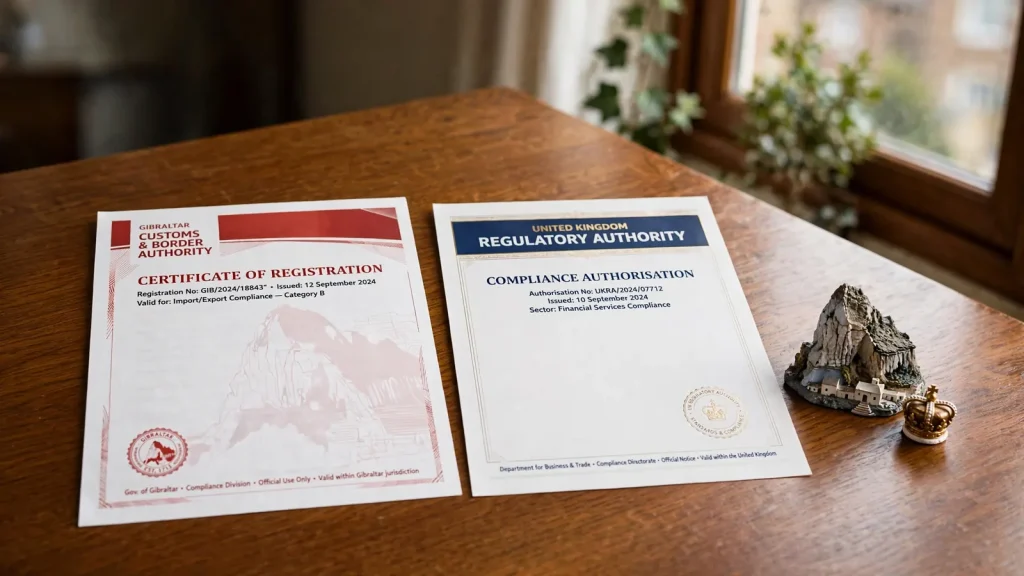
A Gibraltar licence reflects the operator’s regulatory basis there, but does not replace UK Gambling Commission authorisation for Great Britain.
Table of Contents
- What Gibraltar Licensing Means for UK-Facing Gambling
- Gibraltar-Licensed Sites and the Limits of UK Oversight
- How Offshore Casino Licensing Differs Across Jurisdictions
- Access, Self-Exclusion and the Limits of Player Protection
- Payments, Bonus Terms and Withdrawal Uncertainty
- Assessing Casino Sites Without Treating Them as Endorsed
- What a Cautious Review of Gibraltar Casino Options Can Establish
- Understanding Claims About Leading Gibraltar Casino Sites
- New Casino Sites: What Their Licensing Claims Can and Cannot Show
- Gibraltar Online Casinos in Practice: Scope and Caveats
- Licensing
What Gibraltar Licensing Means for UK-Facing Gambling
A casino’s place of establishment and the permission it needs to serve customers in Great Britain are separate matters. A business may be based in Gibraltar and hold a Gibraltar online gambling licence, but that fact alone does not establish that it is authorised to offer gambling to people in Great Britain. For this market, the relevant question is whether the operator holds the required licence from the UK Gambling Commission.
The distinction matters because a licence is issued under the rules of the jurisdiction responsible for it. Gibraltar licensing may describe the regulatory basis on which an operator conducts gambling from Gibraltar; it does not, by itself, replace the authorisation required for supplying services into Great Britain. The same principle applies regardless of where an operator is based: location does not remove the requirement to hold a UK Gambling Commission licence when serving customers in Great Britain.
The Gambling Act 2005 addresses operators supplying gambling services into the UK market, rather than making individual players the target of its licensing rules. This does not make a foreign licence equivalent to a British one. Instead, it separates the operator’s obligations from a player’s position: the licensing question concerns whether the business is authorised to serve the market, not simply whether it has a licence somewhere.
For a UK reader considering casinos associated with a Gibraltar licence in 2026, payout timing is one practical detail to check. The entries below state the available withdrawal-speed information for each operator.
1. Dieselwin
Payout speed: 1-3 business days Dieselwin lists a payout speed of 1–3 business days.
2. x3bet
Payout speed: 1-3 business days x3bet lists a payout speed of 1–3 business days.
3. Britsino
Payout speed: 1-3 business days Britsino lists a payout speed of 1–3 business days.
4. Revery Play
Payout speed: 1-3 business days Revery Play lists a payout speed of 1–3 business days.
5. Chanze
Payout speed: 1-3 business days Chanze lists a payout speed of 1–3 business days.
6. Amunbet
Payout speed: 1-3 business days Amunbet lists a payout speed of 1–3 business days.
7. BeOnBet
Payout speed: 1-3 business days BeOnBet lists a payout speed of 1–3 business days.
8. Zombillion
Payout speed: 1-3 business days Zombillion lists a payout speed of 1–3 business days.
9. Jetsetspins
Payout speed: 1-3 business days Jetsetspins lists a payout speed of 1–3 business days.
10. WinBeast
Payout speed: 1-3 business days WinBeast lists a payout speed of 1–3 business days.
This distinction also makes the phrase “Gibraltar casino” ambiguous. It might refer to a casino business established in Gibraltar, an operator holding a Gibraltar-issued licence, or a site accessible to someone in Britain. Those descriptions do not answer the same question. In particular, a site’s accessibility does not demonstrate that it is authorised to serve British customers, and a Gibraltar licence should not be read as proof of UK Gambling Commission oversight.
The broader licensing landscape includes operators associated with jurisdictions such as Malta, Curaçao, Gibraltar and Anjouan. That list describes places where non-UK-regulated casinos may be licensed; it does not establish that every operator licensed in those places has identical permissions or operates under identical conditions. For a UK-facing assessment, the decisive point remains the authorisation required for the market being served.
Accordingly, a Gibraltar online casino should be understood through two distinct details: where the operator is established or licensed, and whether it holds the UK Gambling Commission licence required to serve customers in Great Britain. Treating the first as a substitute for the second confuses jurisdiction of establishment with market authorisation. This is the central legal distinction behind the phrase “Gibraltar casino licence UK”: a Gibraltar licence may describe an offshore regulatory status, while permission to serve Great Britain depends on the separate UK licensing requirement.
Casino Licensing & Access for UK Players
Gibraltar-Licensed Sites and the Limits of UK Oversight
A Gibraltar authorisation and oversight by the UK Gambling Commission are separate regulatory matters. A casino may be licensed in Gibraltar, but that status does not make it a UKGC-regulated casino. The distinction concerns which authority supervises the operator, not simply where the company is based or where its licence was issued.
In Great Britain, the relevant test for an operator is whether it supplies gambling services to customers in the market. Operators doing so must hold the appropriate UK Gambling Commission licence, regardless of their place of establishment. A Gibraltar casino licence therefore cannot be treated as a substitute for UK authorisation when a site serves customers in Great Britain. The same principle applies to a company based elsewhere: its location does not remove the UK licensing requirement.
The term “non-UK-regulated casino” describes an online gambling site operating without UK Gambling Commission oversight. It does not, by itself, establish that a site is unlicensed everywhere. A Gibraltar-licensed site may be regulated under the rules of its licensing jurisdiction while remaining outside the UKGC system. Those are distinct claims, and one should not be used as shorthand for the other.
This distinction matters when assessing descriptions such as “Gibraltar online casino licence”. The wording identifies a claimed licensing connection, but it does not establish that the operator is authorised to serve the British market, or that UK regulatory protections apply. Nor does it determine the quality of the operator’s conduct. A licence from one jurisdiction is evidence about a regulatory relationship with that jurisdiction; it is not evidence of UKGC supervision.
A Gibraltar licence is evidence of a regulatory relationship with that jurisdiction, but it is not evidence of UK Gambling Commission supervision or authorisation to serve the British market.
The legal position for individuals should also be kept separate from the rules governing operators. UK law does not expressly bar British citizens from using gambling services licensed abroad. Gambling on a site without UK authorisation is not, in itself, a criminal offence committed by the player. That does not turn an unauthorised site into a legally approved UK casino: the requirement to hold a UKGC licence applies to operators serving Great Britain.
Accordingly, claims about an online casino with a Gibraltar licence need to be read narrowly. They may indicate that the operator has a licence associated with Gibraltar, but they do not show that the site is within UK Gambling Commission oversight. Conversely, describing a site as non-UK-regulated does not necessarily mean that it has no licence at all. The decisive distinction is between regulation under another jurisdiction and authorisation to supply gambling services in Great Britain.
How Offshore Casino Licensing Differs Across Jurisdictions
Gibraltar is one of several jurisdictions associated with online casino licensing, alongside Malta, Curaçao and Anjouan. That grouping describes where licences may be issued; it does not establish that the jurisdictions apply identical rules or that a licence has the same effect in every market. The phrase “Gibraltar-regulated online casino” therefore identifies a claimed regulatory connection, not a complete account of the operator’s permissions or oversight.
Why an online casino is based in Gibraltar may relate to its business and licensing arrangements. Its place of establishment and the scope of its authorisation are separate matters. A licence should be understood according to the issuing jurisdiction’s framework, rather than treated as a general passport to operate wherever customers can access a site.
No Account Casino UK: What the Claim Means
Anjouan illustrates why jurisdiction-specific distinctions matter. An Anjouan casino licence does not authorise operation in the United Kingdom or other restricted markets. Its framework also does not require random number generator testing, audits or the segregation of player funds. These are specific features of the Anjouan regime; they should not be attributed to Gibraltar or other jurisdictions without separate evidence.
The distinction also extends to complaints. The Anjouan authority does not handle, mediate or decide player complaints. That fact cannot be used to infer how a Gibraltar regulator handles complaints, just as Gibraltar’s regulatory status cannot establish the terms of an Anjouan licence. Each arrangement must be considered on its own terms.
For UK readers, the useful comparison is not a simple ranking of jurisdictions. A licence’s name alone does not establish the range of games permitted, the standards applied to an operator, or the routes available when a dispute arises. Those questions depend on the relevant regulator and the particular authorisation. “Regulated online casinos in Gibraltar” is consequently too broad a category to imply uniform oversight across all sites associated with the territory. Gibraltar, Anjouan and other licensing locations belong to the same wider offshore landscape, but their rules and practical scope should not be conflated.
Access, Self-Exclusion and the Limits of Player Protection
The practical difference between a UK-regulated casino and a non-UK-regulated site is not limited to the location of its licence. It also affects which safeguards apply and where a complaint can be taken. A Gibraltar-based casino may be accessible to people in Britain, but its location does not make it part of the UK’s player-protection systems.
GamStop illustrates this boundary. Casinos not on GamStop are outside the UK Gambling Commission’s self-exclusion scheme. A person who has registered with GamStop should therefore not assume that the registration will prevent access to every casino online with a Gibraltar connection. The scheme applies to participating operators; it does not itself extend to a site that is outside it.
Player Protection
Non-UK-regulated casinos do not offer UK-mandated safeguards, and registration with GamStop does not prevent access to every casino with a Gibraltar connection.
This distinction matters because self-exclusion is one part of a wider set of controls. Non-UK-regulated casinos do not offer the same UK-mandated safeguards, including the responsible-gambling tools available through UKGC-regulated operators. Deposit limits and self-exclusion should not be assumed to work in the same way, or to be available at all, on a non-UK-regulated site. The availability and operation of any controls depend on the individual operator, and their presence would not make the site subject to UKGC oversight.
Standards for responsible gambling and data protection may also be less stringent outside the UKGC system. That is a relevant risk for online casinos associated with Gibraltar, but it does not establish that every operator handles information or player welfare identically. A licence location alone cannot settle how a particular company applies its policies in practice.
Complaint routes are another material difference. Players using offshore casinos lose access to the UK’s Financial Ombudsman Service and to mandatory responsible-gambling tools. If a dispute arises, the UKGC’s protections and routes for complaint are not available simply because a site accepts customers in Britain or describes itself as Gibraltar-licensed. The practical options may therefore depend on the operator’s own procedures and the rules of its licensing jurisdiction.
For this reason, the phrase “casino online Gibraltar” does not establish a particular level of protection. It identifies a connection with a jurisdiction, not whether UK self-exclusion applies, which safeguards are provided, or what recourse exists if a complaint is unresolved. Those limits are especially important where gambling controls are being used to manage harm: a UK scheme cannot be treated as a universal barrier across sites outside its scope.
Casinos Without a UK Licence: Rules and Risks
Payments, Bonus Terms and Withdrawal Uncertainty
Payment options at a non-UK-regulated casino can include credit cards, e-wallets, bank transfers and cryptocurrencies. Transactions may be handled through alternative processors, so the methods displayed at deposit need not reveal every condition attached to a payment. A method’s availability for depositing does not establish that it can also be used to withdraw winnings; the operator’s terms and the payment provider’s rules may differ.
For people comparing real-money casinos associated with Gibraltar, the practical question is therefore not only which payment types are listed, but what happens between deposit and withdrawal. The stated method, any processing conditions and the applicable account terms all matter. A payment option alone does not establish how quickly funds will be returned or whether a particular transaction will be accepted.
Withdrawal timing is especially uncertain. Accounts of non-UK-regulated casinos disagree: some describe payments arriving within 24 hours to five business days, while others report waits of three or four weeks. These accounts cannot be reconciled into a single expected timeframe. The longer delays are reported without a regulatory clock for enforcement, so an advertised or reported processing speed should not be treated as a guaranteed outcome.
A specialist review has also reported that some operators set daily, weekly or monthly withdrawal limits, potentially splitting a substantial win into instalments. That is a report about certain sites, not a general condition established for every Gibraltar real-money casino. Where such limits apply, they can affect the time needed to receive a balance even if an individual withdrawal is processed promptly. The specific terms, rather than the jurisdiction label, determine whether this issue applies.
Withdrawal Limits
Some operators may set daily, weekly, or monthly withdrawal limits, which can result in substantial wins being paid out in instalments.
Bonuses introduce a separate set of conditions. A specialist review has reported offshore welcome offers with wagering requirements of 35 times or more. This should not be read as a standard term across all offers, nor does the headline bonus value indicate how much can ultimately be withdrawn. The wagering condition may determine how much qualifying play is required before bonus-related funds become withdrawable; other restrictions in the offer terms may also affect eligibility.
Comparisons of real-money online casinos should therefore distinguish between cash deposited by the player and promotional credit. The relevant terms can specify which games count, how a bonus is treated during play, and what happens if conditions are not met. Without those details, a large advertised offer provides little evidence of its practical value. The same caution applies to claims about fast payouts: a stated processing time and a completed withdrawal are not equivalent.
Gibraltar casino regulation does not, by itself, settle these transaction questions. The licence label cannot establish the payment processors used, the withdrawal rules attached to an account or the terms of a particular promotion. Those conditions are operator-specific and may change. Consequently, payment and bonus claims are best understood as claims about an individual site’s current terms, not as features guaranteed by its place of licensing.
Assessing Casino Sites Without Treating Them as Endorsed
A Gibraltar connection is a claim to examine, not a conclusion about a casino site. The phrase may refer to a company, a licensing arrangement or an operational base; those are not interchangeable. A site’s wording, branding or stated location does not by itself establish which legal entity runs the gambling service, what permission that entity holds, or which customers that permission covers. Assessment therefore depends on matching the claim to identifiable regulatory information rather than treating a Gibraltar reference as a general seal of approval.
The relevant authority for Gibraltar is the Gibraltar Regulatory Authority. Where a site claims a Gibraltar licence, the name of the operator and the scope of the stated authorisation need to be considered together. A licence attributed to a corporate group does not, on its own, prove that the particular site or contracting company is covered. Nor does the existence of a licence establish that every product, payment route or customer market is included in its terms. If the company name or scope cannot be matched to the claim, the claim remains unverified.
This distinction matters especially for casino sites that accept or appear to accept customers in Great Britain. Gibraltar authorisation and permission to serve the British market are separate questions. Operators supplying gambling services to customers in Great Britain are required to hold a UK Gambling Commission licence, regardless of where the business is based. A Gibraltar licence should not therefore be read as evidence of UKGC authorisation. Conversely, a site’s description of itself as Gibraltar-licensed cannot establish that its activity for British customers is lawful under the British licensing framework.
A careful assessment also separates evidence of regulatory status from conclusions about service quality. A licence may identify a regulatory relationship, but it does not by itself prove that withdrawals will be straightforward, that bonus terms are favourable, or that a dispute will be resolved in a particular way. Those matters require separate evidence, such as the applicable terms and the stated complaint process. Even where information is published, its presence does not demonstrate how consistently it is applied in practice.
Do
- Match the operator name to the licence record
- Verify the specific scope of the authorisation
- Check the current terms for withdrawals and bonuses
Don’t
- Treat a Gibraltar reference as a general seal of approval
- Assume a licence proves straightforward withdrawals
- Infer product availability from a company’s location
Payment claims illustrate the limitation. Non-UK-regulated casinos may set less restrictive deposit and withdrawal policies, and some may process payouts more quickly. That possibility cannot be converted into a general expectation for Gibraltar online casino sites. A stated payment method or advertised processing time is not proof that the method will be available to every customer or that a withdrawal will follow the same timetable. The terms attached to an account and the operator’s handling of a particular request remain relevant.
Claims about verification also need proportionate treatment. A specialist review has reported cases in which an offshore operator requested notarised documents or a video call before releasing a withdrawal. That report is evidence that such steps have been described, not evidence that they are standard across Gibraltar casino companies or that a particular site will impose them. It would be equally unsound to infer from a site’s smooth sign-up process that later verification will be minimal. An assessment should distinguish a documented, site-specific condition from an anecdote or a generalised description.
The same discipline applies to online slots and other games. A Gibraltar association alone does not establish the titles available, the rules governing them, or the conditions attached to play. Such claims require direct, current information from the relevant site or its stated terms. Product availability should not be inferred from a company’s location or from descriptions of Gibraltar online slots elsewhere.
In practical terms, the strongest conclusion available from a verified licence claim is narrow: an identified entity has a stated regulatory status within a defined scope. It does not endorse the operator, confirm UKGC oversight, or settle questions about transactions and contractual terms. Where the entity, scope or market covered is unclear, the evidence supports uncertainty rather than reassurance. This approach allows Gibraltar-related claims to be assessed without turning a regulatory reference into an unsupported recommendation.
What a Cautious Review of Gibraltar Casino Options Can Establish
A review of Gibraltar casino options can describe what its evidence supports, but it cannot turn a licence label into a general finding of quality. A page may identify a site as Gibraltar-licensed, compare its stated features with those of other sites, or summarise published terms. Those are distinct claims, and each needs evidence suited to it. The presence of a jurisdiction’s name does not establish that every claim about convenience, fairness or safety is true.
The first distinction is between a verifiable regulatory detail and an interpretation. A licence statement is a factual claim that should be traceable to an appropriate public record and matched to the company operating the site. Even if that match is established, it demonstrates a regulatory connection; it does not, by itself, prove that the site is suitable for every player or that all of its practices are satisfactory. Nor does it establish authorisation to serve customers in Great Britain. Those conclusions require separate evidence and should not be implied by a review’s overall rating.
Reviews also differ in what they actually inspect. A description based on an operator’s own pages can report what the business says about its services. It cannot independently confirm every part of that description. A reviewer who checks published terms can assess their wording at the time of inspection, but that is not equivalent to testing how the terms are applied in individual cases. A review that does not state its method, date or evidence base leaves readers unable to tell whether a claim was checked, repeated from promotional material, or inferred.
Review Limitations
- A licence statement is a factual claim, not a proof of suitability for every player
- Reviewers reporting based on operator pages cannot independently confirm every claim
- Terms such as “safe” or “trusted” require specific evidence to be meaningful
- Rankings often reflect editorial preference rather than objective superiority
This limitation matters when language moves from observable features to broad assurances. Terms such as “safe”, “trusted” or “reliable” combine several possible meanings: a recognisable licence, clear information, consistent account handling, effective complaint resolution, or other forms of protection. A review needs to specify which element it has assessed. Without that distinction, a favourable description can appear more conclusive than the underlying evidence warrants. The same caution applies to claims of ease or convenience: a listed feature does not establish that it will work in every situation.
Comparisons between jurisdictions require particular care. The conditions associated with one licence cannot simply be attributed to another. For instance, Anjouan-licensed casinos are not required to integrate GAMSTOP, and they do not offer an independent dispute-resolution route comparable to services approved by the UK Gambling Commission. Those points describe the Anjouan framework; they are not evidence about Gibraltar-licensed sites. Conversely, identifying a site with Gibraltar does not establish the details of its complaint process. Such details need to be checked for that operator rather than assumed from a broad regional label.
The word “best” is especially difficult to substantiate in a review. It may refer to an editorial preference, a set of measured criteria, or a commercial placement. Unless criteria and supporting evidence are visible, a ranking cannot show that one casino is objectively superior. Even a transparent comparison can only answer the question its criteria were designed to measure. It cannot establish a universal choice for all users, and a high position should not be read as a guarantee of conduct or outcome.
A useful review therefore separates what is directly documented from what remains an evaluation. It can report the exact scope of a licence claim, identify the material examined, and explain the limits of its comparison. It should distinguish information supplied by the operator from independent verification, and avoid presenting an absence of reported problems as proof that problems cannot occur. These boundaries do not make reviews worthless; they make their conclusions more precise.
For a Gibraltar casino site, the defensible conclusion from a review is consequently narrow: it may help clarify which claims have been checked and which are promotional or unresolved. It cannot make a licence stand in for a complete assessment, and it cannot convert a comparison into an assurance of safety. Where evidence supports only a specific statement, the review should stop at that statement.
Understanding Claims About Leading Gibraltar Casino Sites
Descriptions such as “leading” or “top” imply a comparison, but the label has little meaning unless the basis of that comparison is stated. A site may be prominent in a search result or receive strong editorial language without that establishing a measurable advantage over other Gibraltar-linked casinos. The distinction is between a claim about visibility and a claim supported by comparable evidence.
A defensible comparison would identify what is being assessed and apply the same standard across the sites included. Regulatory status, terms, available safeguards and the handling of disputes are different subjects; a favourable statement about one does not prove strength in the others. Nor does an operator’s connection to Gibraltar establish that every aspect of its service is superior or that a ranking applies to all players.
Financial Risk
Unlike some other frameworks, Anjouan-licensed casinos are not required to keep player funds separate from operator funds, meaning players may rank as unsecured creditors if an operator fails.
The licence claim itself also has a limited evidential role. It can describe a regulatory relationship, but it is not, by itself, proof of a site’s overall quality, financial reliability or suitability for a particular user. A comparison that treats a jurisdiction name as a complete quality assessment compresses distinct questions into one label. Claims about “top Gibraltar casino sites” therefore need to be read as conclusions requiring support, not as facts made true by confident wording.
Evidence should be specific enough to be checked and should distinguish what is verified from what is asserted. For example, a general claim that a site is “safe” cannot be assessed without saying which risk or protection is meant. A statement about a licence does not establish the terms governing withdrawals, the quality of complaint handling or the security of player funds. Those matters require separate evidence, and the absence of evidence on one point should not be converted into a positive conclusion.
Comparisons also depend on scope. A ranking may reflect a narrow editorial criterion, such as a particular feature, rather than a broad assessment of reliability. If the criterion, date of assessment and basis for placing one site above another are unclear, the ranking cannot support a strong comparative conclusion. The word “best” may express preference or promotional positioning; without a transparent method, it should not be treated as an independently established result.
This distinction matters where different licensing frameworks are discussed together. Anjouan-licensed casinos, for instance, do not guarantee that player funds are kept separate from an operator’s funds. If an operator fails, players may rank as unsecured creditors. That specific risk illustrates why a jurisdictional label alone cannot stand in for an assessment of financial protections. It does not establish that every site associated with another jurisdiction has the same arrangements, nor does it validate a broad ranking of Gibraltar casinos.
A careful account of supposedly leading sites should therefore avoid presenting a list as authoritative unless its method and evidence support that status. A licence, a promotional description and a comparative judgement are not interchangeable forms of proof. Where the available information establishes only a narrow point, the conclusion should remain narrow. This leaves room to describe what is demonstrable without implying that a “top” label guarantees quality across every feature that may matter.
New Casino Sites: What Their Licensing Claims Can and Cannot Show
A newly launched casino has little operating history from which to assess how its stated policies work in practice. A licensing claim may identify the framework an operator says it follows, but it does not by itself demonstrate that complaints are handled fairly, withdrawals are processed as stated, or player safeguards function effectively. These are separate questions, and a site’s age makes evidence about its conduct especially limited.
The distinction matters for new Gibraltar online casinos presented to people in Britain. A Gibraltar connection does not establish that an operator holds a UK Gambling Commission licence or that it is authorised to serve customers in Great Britain. The licence claim and the operator’s status in the market are not interchangeable. Nor does the wording of a licence badge establish that the named company, the website and the entity responsible for customer accounts are all the same.
Users of non-UK regulated casinos do not have recourse to UK regulators if terms change or disputes arise.
Even when a licence can be verified, its existence should not be treated as a general quality mark. It does not independently prove that customer-facing terms are clear or that a complaint will lead to a remedy. For a site without a substantial record, promotional statements about safety or reliability remain claims unless supported by evidence of how the operator has acted in comparable cases. In particular, users of non UK regulated casinos do not have recourse to UK regulators when terms change or disputes arise.
The route for complaints also depends on the licensing framework. Under Anjouan’s framework, operators must respond to complaints within 30 calendar days. That requirement describes a response obligation; it does not establish that a complaint will be resolved in the customer’s favour or that an independent body will adjudicate it. A new site’s statement that it follows a complaint process therefore needs to be read in light of what that process actually provides.
For new online casinos in Gibraltar, available information may support a narrow finding: a particular operator makes a licensing claim, or a licence record identifies a particular entity. It cannot, without further evidence, establish the practical quality of protections or predict how a future dispute will be handled. Licensing information is a starting point for understanding a site’s stated status, not proof of its performance. This limit applies regardless of how prominently a new casino describes its credentials.
Gibraltar Online Casinos in Practice: Scope and Caveats
The phrase “Gibraltar online casino” can describe a site by the jurisdiction associated with its licence or business, but that description does not settle whether it may lawfully serve customers in Great Britain. A company’s base and its authority to offer gambling are separate matters. Operators supplying gambling services to people in Great Britain need the relevant UK Gambling Commission licence, even when they operate from Gibraltar. A Gibraltar connection alone does not demonstrate that this requirement has been met.
Curacao Casino Licence in the UK: What It Means
That distinction defines the practical scope of claims about online casinos in Gibraltar. A site may be presented as Gibraltar-licensed, yet that status should not be treated as equivalent to UKGC regulation or as evidence of permission to target the British market. Nor does a label such as “Gibraltar online gambling casino” establish how a particular operator handles accounts, complaints, or player safeguards. Such conclusions require evidence about the specific operator and the relevant authorisation.
The UK legal position concerns operators supplying services into the market, rather than making individual players criminally liable simply for using a foreign-licensed service. British law does not explicitly prohibit citizens from using gambling services licensed elsewhere, and a player using an unlicensed site does not commit a criminal offence under UK law. That does not make the site a lawful UK gambling service: online gambling in Britain is legal only through a properly licensed and regulated operator. The distinction between operator obligations and player liability should therefore remain clear.
Claims about the Gibraltar online casino industry also need careful interpretation. The jurisdiction’s name may indicate where a licensing or business connection is asserted, but it cannot, by itself, substantiate broad claims about quality, reliability, or suitability for British customers. Likewise, describing a site as established, new, or among the “top” options does not resolve its regulatory status. These are separate claims and require separate evidence; a ranking or launch announcement is not a substitute for confirmation of the authorisation relevant to the market being served.
Payment descriptions require similar care. Crypto may be used in ways that avoid the UK restriction on gambling funded by credit cards, but that does not convert an offshore service into a UK-licensed one or remove the need to understand how the transaction is handled. A specialist review has also reported deposits through mobile-phone billing or deductions from prepaid balances. That is a report about a possible method, not evidence that it is a stable or widely available feature across Gibraltar-linked sites.
In practice, the jurisdictional label is only one part of the picture. It can describe an asserted connection, but it does not establish British-market authorisation or verify wider promises made about a site. The legal question remains whether the operator holds the licence required to serve Great Britain; other descriptions should not be allowed to stand in for that answer.
What payment options are available at non-UK casinos?
They may accept credit cards, e-wallets, bank transfers and cryptocurrencies, sometimes through alternative processors. Some also allow deposits charged to a mobile phone bill or deducted from a prepaid balance.
Are sites that are not on GamStop legal for players in the UK to access?
UK law does not explicitly prohibit British citizens from using gambling services licensed abroad, and players do not commit a criminal offence merely by gambling on an unlicensed site. However, operators serving Great Britain need a UK Gambling Commission licence, and a foreign licence does not replace it.
Are Anjouan casinos connected to the GamStop self-exclusion scheme?
No. Anjouan-licensed casinos are not required to integrate GAMSTOP, so players should not expect its self-exclusion protections to apply.
What are non-UK-regulated casinos?
They are online gambling sites that operate without oversight from the UK Gambling Commission. They may be licensed in another jurisdiction, such as Malta, Curaçao, Gibraltar or Anjouan.
What is the biggest risk of playing at a non-UK-regulated casino?
A key risk is having less recourse if a dispute arises: players do not have access to the UK’s Financial Ombudsman Service or mandatory UK responsible-gambling tools. At Anjouan-licensed casinos, player funds are not guaranteed to be segregated, and the Anjouan authority does not adjudicate player complaints.
Licensing

Anjouan Casino Licence and UK Gambling Rules
An overview of what an Anjouan licence indicates, where it falls short, and how it...

Foreign Casinos for UK Players: Rules and Risks
The guide explains how UKGC licensing differs from offshore status and what that can mean...

International Casinos for UK Players: Access and Regulation
The guide distinguishes overseas location from UKGC licensing and explains the legal, payment and consumer-protection...

Offshore Casino Sites in the UK: Licensing and Risks
In the UK, offshore refers to operators accepting British customers without a UKGC licence, not...

Offshore Casinos for UK Players: Rules and Risks
The guide distinguishes foreign licensing from UK authorisation and examines payments, bonuses, safeguards and payout...

Casino No ID Verification in the UK: What It Means
The guide separates delayed document requests from claims of no checks and explains how verification...

Non-UK Licence Casinos: What the Licence Means
A licence identifies the regulator and jurisdiction responsible for an operator, but does not automatically...

Casinos Without a UK Licence: Rules and Risks
This guide explains how UK licensing differs from overseas permissions and outlines verification, self-exclusion, payments...

Curacao Casino Licence in the UK: What It Means
A Curaçao association does not make a casino UKGC-regulated; this guide explains the distinction and...

No Account Casino UK: What the Claim Means
The label may describe easier entry, but it does not establish what details are collected...

No-ID Verification Casino Withdrawals in the UK
A short registration process does not remove identity checks; withdrawal timing also depends on verification...

Non-UK-Registered Casinos: Regulation and Risks
A foreign licence and the absence of UKGC oversight affect how casino sites relate to...

Non-UK-Regulated Casinos: UK Rules and Risks
UKGC licensing depends on whether an operator serves Great Britain, while an overseas licence does...

Non-UKGC Licensed Casinos: Rules and Risks
A casino’s location does not determine which rules apply: foreign licensing does not replace UKGC...

Online casino Malta MGA licence in the UK: explained
An MGA licence and permission to serve Great Britain are separate; fund segregation does not...

Online Casino No Registration UK: What It Means
Browser-based slots avoid installing separate software, but that alone says nothing about account creation or...

USA Casinos for UK Players: Legal and Payment Risks
The guide explains how foreign casinos differ from UK-licensed operators and outlines key checks on...

VPN-Friendly Casinos in the UK: Rules and Risks
A VPN may change how a casino connection appears, but it does not change the...






























































































































































































































































