Non-UK Licence Casinos: What the Licence Means
 Available in GB

A licence identifies the regulator and jurisdiction responsible for an operator, but does not automatically authorise service in every country.
Table of Contents
- What a Non-UK Gambling Licence Covers
- How Overseas Licensing Jurisdictions Differ
- Assessing Casino Licensing Claims and Safeguards
- UK-Licensed Casinos and the Meaning of a UK Licence
- Anjouan Licensing: Scope and Player Recourse
- Curaçao Licensing, Crypto Payments and Withdrawal Conditions
- What UK Gambling Commission Licensing Provides
- MGA Licensing and the Limits of Jurisdictional Comparisons
- How to Interpret Searches for UK-Licensed and Unlicensed Casinos
- New Casino Licences: Verification Before Use
- Licensing
What a Non-UK Gambling Licence Covers
A non-UK-regulated casino is an online gambling site that operates outside the oversight of the UK Gambling Commission (UKGC). It may hold authorisation from a regulator in another jurisdiction, but that authorisation is not a UK casino licence and does not place the site under UKGC supervision. The distinction concerns the regulator responsible for the operator, not simply the country where the website is hosted or the company is based.
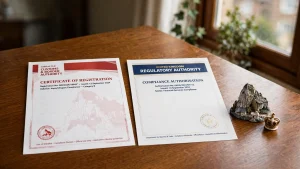
An online casino licence is an authorisation associated with a particular regulator and legal jurisdiction. The term “licensed” therefore needs context: it identifies a relationship with a licensing authority, but does not, by itself, establish that an operator is authorised to serve customers in every country. A licence issued outside the UK and a UKGC licence are separate forms of authorisation. One should not be treated as a substitute for the other.
Non-UK-regulated casinos are typically licensed in jurisdictions such as Malta, Curaçao, Gibraltar or Anjouan. These names identify places whose licensing frameworks may be relevant to an operator; they do not describe a single, uniform category of oversight. The details of those jurisdictions differ and require separate consideration. For the basic distinction, the key point is that a licence from one of them remains a licence under that jurisdiction’s framework, rather than becoming a UKGC licence because the casino is accessible online.
For UK readers considering casinos that may not hold a UK licence, it is worth checking the relevant terms and protections before choosing where to play. This list provides a brief reference point on the payout-speed information available for each operator.
1. Dieselwin
Payout speed: 1-3 business days Dieselwin lists a payout speed of 1–3 business days.
2. x3bet
Payout speed: 1-3 business days x3bet lists a payout speed of 1–3 business days.
3. Britsino
Payout speed: 1-3 business days Britsino lists a payout speed of 1–3 business days.
4. Revery Play
Payout speed: 1-3 business days Revery Play lists a payout speed of 1–3 business days.
5. Chanze
Payout speed: 1-3 business days Chanze lists a payout speed of 1–3 business days.
6. Amunbet
Payout speed: 1-3 business days Amunbet lists a payout speed of 1–3 business days.
7. BeOnBet
Payout speed: 1-3 business days BeOnBet lists a payout speed of 1–3 business days.
8. Zombillion
Payout speed: 1-3 business days Zombillion lists a payout speed of 1–3 business days.
9. Jetsetspins
Payout speed: 1-3 business days Jetsetspins lists a payout speed of 1–3 business days.
10. WinBeast
Payout speed: 1-3 business days WinBeast lists a payout speed of 1–3 business days.
The operator’s base of operation does not change the UK requirement. Operators serving customers in Great Britain need a UK Gambling Commission licence, regardless of where they are established. Consequently, a company based outside the UK cannot rely on its overseas authorisation as the UK licence required for serving the British market. Likewise, describing a site as an international or foreign-licensed casino does not settle whether it holds the authorisation required for a particular market.
“Non-UK licence” is therefore a description of the licence’s jurisdiction, not a separate licence category shared by all overseas regulators. It can refer to different authorisations issued under different rules. A reference to a casino licence should be read alongside the name of the authority that issued it and the market for which the operator is authorised. Without that context, the word “licensed” can be too broad to establish what oversight applies.
The phrase “non-UK-regulated casino” is also more precise than simply calling a site a licensed online casino. A site may have a licence outside the UK and still operate without UKGC oversight. Conversely, the fact that a site is not overseen by the UKGC does not identify which overseas regulator, if any, is responsible for it. These descriptions are not interchangeable: one indicates the absence of UKGC supervision, while the other would need to identify a specific licensing relationship.
Casinos Without a UK Licence: Rules and Risks
The difference matters when interpreting references to a UK casino licence or an online casino licence in the UK. In this context, those terms concern UKGC authorisation, not any licence that happens to have been issued abroad. An overseas authorisation may be relevant to the operator’s status in its licensing jurisdiction, but it does not establish that the operator meets the UK requirement for serving customers in Great Britain. A site’s own description of its status should not collapse those two questions into one.
The same distinction applies to a new licensed online casino. “New” describes the site’s presence or launch, not the jurisdiction or reach of its authorisation. A recently launched operator may refer to an overseas licence, but the age of the site does not turn that licence into a UKGC authorisation. The licensing jurisdiction remains central to understanding which regulator is involved.
This terminology does not rank jurisdictions or imply that every overseas framework has the same scope. Malta, Curaçao, Gibraltar and Anjouan are examples of jurisdictions associated with non-UK casino licensing; their rules and the practical meaning of authorisation under each framework should not be assumed to match. Their individual differences are a separate matter from the threshold definition: a non-UK-regulated casino operates without UK Gambling Commission oversight, even if it holds a licence elsewhere.
Accordingly, the phrase “casino licence” alone is incomplete when the relevant issue is UK regulation. The issuing authority and the market being served determine what the licence represents. An overseas licence identifies authorisation outside the UKGC system; it does not amount to a UK online casino licence. For operators serving customers in Great Britain, the required UK authorisation is a licence from the UK Gambling Commission, irrespective of the operator’s location.
Attention: An overseas licence does not amount to a UK online casino licence, and operators serving customers in Great Britain must hold a licence from the UK Gambling Commission.
How Overseas Licensing Jurisdictions Differ
An overseas gambling licence is not a single, uniform status. Non-UK-regulated casinos are commonly associated with jurisdictions such as Malta, Curaçao, Gibraltar and Anjouan, but the location named on a licence identifies a particular regulatory framework. It does not, by itself, establish that every operator under that framework is subject to the same requirements or that a licence issued in one jurisdiction has the same significance as one issued elsewhere.
The phrase “Malta-licensed online casino”, for instance, identifies Malta as the licensing jurisdiction. It does not mean that the casino holds a UK Gambling Commission licence, nor does the label alone establish what protections apply to its customers. The same distinction applies to casinos licensed in Curaçao, Gibraltar or Anjouan. These jurisdictions can be grouped as examples of non-UK licensing, but not treated as interchangeable authorities.
The practical meaning of a remote casino operating licence depends on the rules and oversight attached to the issuing jurisdiction. A licence is therefore evidence of a regulatory connection, not a general certificate that all relevant standards are equivalent. Non-UK-regulated casinos can be subject to less demanding responsible-gambling and data-protection requirements than operators licensed by the UK Gambling Commission. That broad possibility should not be turned into an unsupported ranking of individual jurisdictions: the jurisdiction name alone does not show how a particular operator applies its rules.
This distinction also limits what can be concluded from a search for a Malta-licensed casino or a list of casinos licensed in Malta. The country named in a promotional claim is only one part of the regulatory picture. It does not establish the operator’s full legal position in every market, or whether a particular service is available to a customer in Great Britain. A foreign licence should not be described as authorisation to serve the British market.
Nor does the word “licensed” settle whether an operator is reputable or safe. It describes a claimed relationship with a regulator, while the substance of that relationship depends on the issuing jurisdiction and the operator’s status under it. A general answer to how to choose a safe licensed online casino cannot rest on the jurisdiction label alone. The same caution applies when comparing how many licensed online casinos exist in the UK with the number associated with another jurisdiction: counts are meaningful only when the licence category and the market being counted are clearly defined.
The four examples illustrate why the term “overseas licence” is too broad to serve as a complete description. Malta, Curaçao, Gibraltar and Anjouan are distinct licensing jurisdictions, not different names for one shared authority. Their inclusion in the same list indicates only that they are among jurisdictions associated with non-UK-regulated casinos. It does not establish identical standards, procedures or protections across them.
A useful comparison therefore begins by separating three questions: which jurisdiction issued the licence, what that jurisdiction’s framework requires, and whether the operator is authorised for the market in question. These questions should not be collapsed into a single judgement based on a badge or a country name. In particular, the presence of a foreign licence does not make an operator UK-licensed, and a jurisdiction’s reputation cannot be inferred from the fact that casinos in several different places all describe themselves as licensed.
Malta
A licensing jurisdiction associated with non-UK-regulated casinos.
Curaçao
A licensing jurisdiction associated with non-UK-regulated casinos.
Gibraltar
A licensing jurisdiction associated with non-UK-regulated casinos.
Anjouan
A licensing jurisdiction associated with non-UK-regulated casinos.
This is a matter of precision rather than terminology alone. Treating every overseas licence as equivalent obscures differences between regulatory frameworks; treating the word “licensed” as a guarantee obscures what the licence actually covers. The jurisdiction is a starting point for understanding the regulatory setting, not a substitute for understanding its scope.
Assessing Casino Licensing Claims and Safeguards
A licence claim and the protections available to players are related, but they are not interchangeable. A casino may identify a regulator without showing that its responsible-gambling or data-protection requirements match those imposed on operators licensed by the UK Gambling Commission (UKGC). The relevant assessment is therefore not only whether a licence is named, but what safeguards apply under it and what practical routes exist if those safeguards fail.
A clear claim should identify the licensing authority and the company operating the site. General statements such as “fully licensed” provide little evidence on their own: they do not establish which regulator is involved or whether the claim applies to the particular operator. The details should be consistent across the casino’s terms, account information and any public register maintained by the named authority. A logo or badge, without a verifiable connection to the operator, is not sufficient evidence of regulatory status.
The scope of a licence also matters. An authorisation from a regulator outside the UK does not, by itself, establish that the casino meets UKGC requirements. Nor does the use of security language or references to compliance demonstrate that the operator is subject to the same rules. Comparisons should be based on the obligations imposed by the relevant framework, rather than on the confidence or detail of the casino’s own marketing.
Responsible-gambling safeguards require particular care. A non-UK-regulated casino may operate under less stringent responsible-gambling requirements than a UKGC-licensed operator. UK-mandated tools are not available to a player through an offshore operator, and a site’s own account controls should not be assumed to provide an equivalent substitute. Deposit limits and self-exclusion measures, for instance, are meaningful only when their availability, operation and scope are clear. A tool described on a website may differ from a mandatory protection in how it is applied or enforced.
The same distinction applies to data protection. A statement that personal information is secure does not, on its own, establish what rules govern its collection, storage, use or disclosure. The casino’s privacy terms and the regulator’s requirements are more informative than broad assurances. Where those requirements are less stringent than UKGC standards, the degree of protection may differ; the presence of a privacy policy does not erase that difference.
The consequences of a dispute are also part of the safeguard picture. Players using offshore casinos do not have access to the UK’s Financial Ombudsman Service in relation to those gambling arrangements, and they forfeit access to mandatory responsible-gambling tools associated with UK-regulated operators. This limits the protections available through UK channels. A casino’s internal complaints process may exist, but its presence should not be mistaken for access to the UK’s formal avenues of recourse.
Do
- Identify the licensing authority and the operating company
- Verify details against the authority’s public register
- Examine the casino’s actual privacy terms and regulator requirements
Don’t
- Rely on general statements like “fully licensed”
- Assume a logo or badge is sufficient evidence of status
- Trust evaluative descriptions such as “trusted” or “safe”
A balanced comparison therefore separates verifiable facts from claims of quality. A named regulator, a traceable operator identity and accessible terms are evidence that can be examined. Words such as “trusted”, “safe” or “best licensed” are evaluative descriptions, not proof that safeguards are comparable. The available information may establish that an operator claims a particular authorisation; it does not necessarily establish that player protections equal those under UKGC oversight.
This distinction is relevant across different payment models, including crypto casinos. A payment method does not establish the strength of the licence, the level of data protection or the availability of responsible-gambling safeguards. Those questions depend on the operator’s applicable requirements and the protections actually offered. Where the evidence does not clarify those points, a firm comparison with UKGC standards cannot be made.
UK-Licensed Casinos and the Meaning of a UK Licence
A casino’s licence is tied to the regulator that issued it. A UK Gambling Commission (UKGC) licence is not interchangeable with authorisation from another jurisdiction: a casino licensed elsewhere is not thereby a UK-licensed casino.
For operators serving customers in Great Britain, the relevant requirement is a UKGC licence, regardless of where the operator is based. This makes the operator’s location and the site’s licensing status separate questions. A company may be established abroad, but that does not remove the requirement to hold a UKGC licence when it supplies gambling services to customers in Great Britain.
The distinction matters when a site describes itself as licensed. That wording alone does not establish that it is licensed to serve the British market. An overseas authorisation indicates a relationship with a regulator in another jurisdiction; it does not satisfy the UK requirement. The same applies to online casinos licensed in Curaçao or Anjouan: those licences should not be represented as UKGC licences.
A payment option does not change this position. A site accepting Litecoin, for instance, is not a licensed UK casino on that basis. The currency used for deposits or withdrawals and the jurisdiction responsible for licensing are distinct features. A “licensed Litecoin casino” label therefore says nothing, by itself, about whether the operator holds the licence required to serve Great Britain.
The term “licensed online casino” can also be ambiguous unless the licensing authority is identified. A licence issued abroad may be a genuine authorisation within its own framework, but it does not establish that the operator meets UK casino licence requirements. Conversely, a UKGC licence is the relevant status for an operator serving customers in Great Britain. The regulator, rather than the general presence of a licence claim, determines which framework applies.
This distinction also helps explain why casinos not on GamStop should not be treated as equivalent to UK-licensed casinos. They are outside the UKGC’s self-exclusion scheme. GamStop status alone does not establish an operator’s complete licensing position, but membership in that scheme is not a substitute for checking whether the operator holds the required UKGC licence.
“UK-licensed” is therefore a specific regulatory description, not a broad synonym for “licensed” or “available online.” For the British market, the key point is whether the operator serving customers in Great Britain holds a UKGC licence. An overseas licence may identify another regulator’s oversight, but it does not confer UKGC status or replace the UK requirement.
Casinos not on GamStop are outside the UK Gambling Commission’s self-exclusion scheme, but this status alone does not establish their complete licensing position.
Anjouan Licensing: Scope and Player Recourse
An Anjouan casino licence identifies a regulatory connection to Anjouan; it does not grant permission to operate in every market. In particular, the authorisation does not extend to the United Kingdom or to other markets identified as restricted. A licence displayed by a casino should therefore not be read as evidence that the site is authorised to serve customers in Great Britain. These are distinct questions: where an operator is licensed, and whether it holds the approval required for the market in which it offers gambling.
The limits become especially important when a disagreement arises. Under Anjouan’s framework, the licensing authority does not take up individual player complaints, mediate between a customer and an operator, or make a decision on the merits of a dispute. Sending a complaint to the authority is therefore not equivalent to using a regulator-run adjudication service. The framework also does not require Anjouan-licensed casinos to offer an independent dispute-resolution process comparable to the approved ADR services associated with UK regulation.
The operator remains the first point of contact for a complaint under this arrangement. Anjouan’s rules require operators to respond within 30 calendar days. That requirement concerns a response; it should not be mistaken for a promise that the complaint will be resolved within that period, or that the operator’s decision will be reviewed independently. If the dispute concerns a refused withdrawal, account restriction or interpretation of terms, the stated response obligation does not itself provide an external route to overturn the outcome.
There is a separate consequence for self-exclusion. Anjouan-licensed casinos are not required to connect to GAMSTOP, the UK’s national self-exclusion scheme. A person who has excluded through GAMSTOP should not assume that this exclusion prevents access to an Anjouan site. Nor does the Anjouan authorisation establish that UK-style responsible-gambling tools are available. The regulatory status and the practical safeguards offered by an individual operator are separate matters.
For that reason, the phrase “non-UK licence casino” covers more than a difference in the name printed on a licence. In the Anjouan case, the framework leaves the licensing authority outside the handling of player disputes and does not require an independent ADR route equivalent to UK-approved services. If the operator changes how it applies its terms or a complaint remains unresolved, the player does not gain access to a UK regulator’s complaints process through the Anjouan licence.
This does not establish that every Anjouan-licensed operator will handle complaints in the same way, or that every complaint will end adversely. It does define the limits of the formal recourse described by the framework: an operator response is required, but authority-led adjudication and comparable independent dispute resolution are not. The licence’s jurisdictional scope should therefore be kept distinct from both permission to serve a particular market and the remedies available to a customer.
Curaçao Licensing, Crypto Payments and Withdrawal Conditions
A Curaçao licence identifies an operator’s licensing jurisdiction; it does not, by itself, authorise the operator to serve customers in Great Britain. Remote gambling operators offering services to Great Britain customers must hold a UK Gambling Commission licence, regardless of where they are based. Payment options therefore need to be considered separately from the status of the licence.
Payment methods, including cryptocurrency, do not change an operator’s regulatory position or turn an overseas licence into a UK licence.
Non-UK-regulated casinos may accept card payments, e-wallets, bank transfers and cryptocurrency, sometimes using processors other than the ones commonly associated with UK-licensed operators. The available methods differ between sites, and a method offered for deposits should not be assumed to be available for withdrawals. Crypto can also move funds without charging a credit card for gambling, but using it does not change the operator’s regulatory position or make an overseas licence a UK licence.
Some non-UK-regulated casinos set less restrictive deposit or withdrawal policies than UK-regulated services. That may allow a payout to be processed more quickly, but the possibility is not a dependable measure of how long an individual withdrawal will take. Reports on timing conflict: one account gives a range from 24 hours to five business days, while another says withdrawals may take three or four weeks. These claims should not be collapsed into a single expected turnaround. Where an operator is outside UKGC oversight, there is no UK regulatory clock requiring it to complete a withdrawal within a specified period.
The payment route can affect processing, but it does not establish that funds will be released promptly. Verification requests, internal review and the operator’s withdrawal terms may still affect a transaction. A cryptocurrency deposit is not evidence that withdrawals are unrestricted, and a displayed processing estimate is not equivalent to an enforceable guarantee.
A Curaçao-licensed crypto casino should therefore be assessed on two distinct points: what its licence covers and what its payment terms actually say. The licence jurisdiction does not settle whether a particular cryptocurrency is supported for both deposits and withdrawals, how a withdrawal is processed, or how a delay can be challenged. Those terms can also differ between operators and payment methods. A site’s payment page and withdrawal conditions describe its stated procedures, but they do not provide the same UK regulatory oversight that applies to an operator licensed to serve Great Britain.
What UK Gambling Commission Licensing Provides
A UK Gambling Commission licence places a casino operating licence within the regulatory system for Great Britain. The key distinction is not simply where a company is based: remote operators supplying gambling services to customers in Great Britain must hold the relevant UKGC licence. An overseas authorisation does not replace it.
That oversight matters when a complaint arises. A customer of a UK-licensed casino can use the complaint and dispute-resolution routes attached to the UK regulatory framework. By contrast, someone playing at an offshore casino cannot take a dispute to the UK Gambling Commission as though that site were one of its licensees, and access to the UK’s Financial Ombudsman Service is also lost. A foreign regulator may have its own processes, but those are not a substitute for UK-based recourse.
Licensing also connects the operator to mandatory responsible-gambling protections. Offshore casinos may not provide the tools required of UKGC-licensed operators, leaving players without equivalent safeguards. This difference concerns the regulatory obligations placed on the business, rather than a guarantee that every complaint will be resolved in the customer’s favour. The value of oversight is that requirements and routes for escalation exist within a defined system.
The legal responsibilities fall principally on operators serving the British market. The Gambling Act 2005 targets businesses supplying gambling services into that market, rather than making the individual player the subject of its enforcement. British citizens are not explicitly prohibited from using gambling services licensed elsewhere, and gambling on an unlicensed site is not, by itself, a criminal offence for the player. Those points do not make an overseas licence a UK casino licence or remove the operator’s obligation to obtain UK authorisation when serving Great Britain.
UKGC Oversight
UKGC authorisation is the only relevant operating licence for a casino serving the Great Britain market.
A casino licence comparison between the UKGC and another regulator should therefore focus on jurisdiction and enforceable protections, not on the mere presence of a licence label. The UKGC authorisation is the relevant operating licence for a casino serving Great Britain; a licence issued elsewhere belongs to a different regulatory framework. The distinction is material if terms are disputed, an account is restricted, or support for safer gambling is needed.
A list of UK Gambling Commission-licensed casinos is meaningful only when it reflects current UKGC authorisation. The central point is the status of the operator’s permission to serve the market, not the wording used in advertising or the location of its headquarters.
MGA Licensing and the Limits of Jurisdictional Comparisons
A Malta Gaming Authority (MGA) licence identifies Malta as the licensing jurisdiction. It does not, by itself, establish that a casino is authorised to serve customers in Great Britain. The distinction is important because an overseas licence and a UK Gambling Commission (UKGC) licence are not interchangeable labels: they refer to different regulators and jurisdictions.
Malta is one of several jurisdictions associated with non-UK-regulated casinos, alongside Curaçao, Gibraltar and Anjouan. That shared description does not make their licensing arrangements identical. Nor does it support a simple ranking in which one overseas licence can be treated as equivalent to another, or to UKGC authorisation. A Malta-licensed casino should therefore be understood in terms of the authority named by its licence, not as a UK-licensed casino under another name.
For operators serving customers in Great Britain, the relevant requirement is separate: a UKGC licence is required regardless of where the operator is based. An MGA licence does not remove that requirement. Consequently, a site’s stated Malta connection cannot alone settle whether it is authorised to serve the British market. The licence jurisdiction and the market in which the service is offered are distinct matters.
The same distinction applies to the form of the product. Whether gambling is accessed through a website or an app does not change the stated requirement for operators serving Great Britain. An app store listing, a mobile interface or the use of the word “licensed” does not identify which regulator issued an authorisation. The jurisdiction named in the licensing information remains the relevant detail.
Terms such as “MGA-licensed casino” and “Malta-licensed casino” describe a jurisdictional association; they do not establish equivalence with a UK licence. Likewise, a “small casino licence” is not a substitute for the market-specific requirement. The size of an operator does not alter the stated rule for services offered to customers in Great Britain.
These distinctions matter when interpreting licensing claims, but they do not by themselves establish the full scope or conditions of a particular authorisation. A jurisdiction name should be read as information about the regulator, not as a general assurance that the operator holds every licence required in every market. For British customers, the decisive distinction remains whether the operator serving them holds the relevant UKGC licence.
The role of the MGA licence
An MGA licence identifies Malta as the jurisdiction and does not grant permission to serve customers in Great Britain; for that market, a UKGC licence is required regardless of where the operator is based.
How to Interpret Searches for UK-Licensed and Unlicensed Casinos
A request for UK-licensed online casinos is asking about operators authorised by the UK Gambling Commission to serve customers in Great Britain. The relevant distinction is regulatory, not simply where a company is based: an operator serving Great Britain must hold the appropriate UKGC licence even if its business is located elsewhere.
By contrast, a casino described as having no UK licence operates outside UKGC oversight. It may hold authorisation from another jurisdiction, but that does not make it UK-licensed. The phrase “unlicensed casino” can therefore be ambiguous: it may mean an operator without a UKGC licence, or one with no gambling authorisation at all. Those are not interchangeable descriptions. A foreign licence does not replace the permission required to serve the British market.
This distinction also matters when a site is described as an offshore licensed casino. The wording indicates that a licence may have been issued outside the UK; it does not establish that the operator is authorised to serve Great Britain, or that its rules and protections match those under UKGC oversight. The licence jurisdiction and the operator’s permission to serve a particular market are separate questions.
GamStop membership is another separate category. Casinos not on GamStop are outside the UK Gambling Commission’s self-exclusion scheme. That describes their relationship with the scheme; it does not, by itself, prove whether a casino holds a licence from another authority. Nor should absence from GamStop be treated as evidence that a site is suitable for someone seeking to avoid gambling.
A label or directory entry is not enough to resolve these distinctions. The operator’s own terms may state which markets it accepts, while a regulator’s public records can help establish the scope of a claimed authorisation. These checks answer different questions: whether a licence exists, which authority issued it, and whether the operator is permitted to serve customers in Great Britain.
The legal framework applies to operators supplying services into the British market, rather than imposing a criminal penalty on individual players for using a site without a UKGC licence. Even so, the absence of UK oversight has practical significance, including the loss of UK regulatory recourse if a dispute arises. Anyone considering an overseas gambling service remains responsible for checking the applicable local laws and understanding the implications of using it.
New Casino Licences: Verification Before Use
A recently announced licence should be treated as a claim to verify, not as proof that a casino is authorised to serve customers in Great Britain. The relevant question is whether the operator named on the site holds the licence it claims to hold. A new UK-licensed casino must be checked against the UK Gambling Commission’s records; an MGA-licensed casino is authorised under a different jurisdiction and should not be described as UK-licensed.
For an Anjouan casino licence, the public register entry should be checked for the operator’s name and the licence’s current validity. The company identified in the entry should correspond to the entity named in the casino’s terms and conditions. A similar trading name, a displayed certificate or a link to a licensing authority is not, by itself, enough to establish that match. An Anjouan authorisation also does not permit the operator to serve the United Kingdom or other markets restricted under that framework.
These checks establish only what the licence record says; they do not establish that every claim about a casino’s services is accurate. A newly promoted licence should therefore not be treated as evidence of UK regulatory oversight unless the operator holds the relevant UK Gambling Commission licence. Players remain responsible for checking the laws that apply to them and understanding the implications of using gambling services licensed elsewhere.
Age verification is a separate requirement. An operator must establish a customer’s age before allowing deposits into a gambling account. A site’s claim that verification will happen later does not alter that requirement. Licence status and age checks concern different matters: neither should be inferred solely from promotional wording, and a licence issued in one jurisdiction should not be assumed to confer permission in another.
Is it legal for a UK player to gamble at an Anjouan-licensed casino?
UK law does not explicitly prohibit British citizens from using gambling services licensed abroad, and players do not commit a criminal offence by gambling on an unlicensed site. However, an Anjouan licence does not authorise a casino to serve customers in the UK; operators serving customers in Great Britain need a UK Gambling Commission licence.
Can UK players legally play at casinos licensed in Anjouan?
UK law does not explicitly prohibit British citizens from using gambling services licensed in other countries. An Anjouan licence does not authorise the operator to serve the UK market, though, and the operator—not the player—is the target of the Gambling Act 2005.
Are Anjouan casinos connected to the GamStop self-exclusion scheme?
No. Anjouan-licensed casinos are not required to integrate with GamStop, the UK Gambling Commission’s self-exclusion scheme.
Can I complain to the Anjouan regulator if a casino won’t pay me?
No. The Anjouan authority does not handle, mediate or adjudicate player complaints.
How do casinos outside GamStop operate?
They operate outside the UK Gambling Commission’s oversight, typically under a licence from another jurisdiction. Casinos outside GamStop are not part of the UK’s self-exclusion scheme.
What happens if I have a dispute with an Anjouan-licensed casino as a UK player?
The Anjouan authority does not mediate or decide player disputes, and these casinos do not provide an independent dispute-resolution route comparable to UKGC-approved ADR. Operators must respond to complaints within 30 calendar days under Anjouan’s framework.
Are non-UK regulated casinos legal for UK players to use?
UK law does not explicitly prohibit British citizens from using gambling services licensed in other countries, and players do not commit a criminal offence by gambling on an unlicensed site. However, operators serving customers in Great Britain need a UK Gambling Commission licence; an overseas licence does not replace it.
Licensing

Anjouan Casino Licence and UK Gambling Rules
An overview of what an Anjouan licence indicates, where it falls short, and how it...
Foreign Casinos for UK Players: Rules and Risks
The guide explains how UKGC licensing differs from offshore status and what that can mean...

International Casinos for UK Players: Access and Regulation
The guide distinguishes overseas location from UKGC licensing and explains the legal, payment and consumer-protection...

Offshore Casino Sites in the UK: Licensing and Risks
In the UK, offshore refers to operators accepting British customers without a UKGC licence, not...

Offshore Casinos for UK Players: Rules and Risks
The guide distinguishes foreign licensing from UK authorisation and examines payments, bonuses, safeguards and payout...

Casino No ID Verification in the UK: What It Means
The guide separates delayed document requests from claims of no checks and explains how verification...

Casinos Without a UK Licence: Rules and Risks
This guide explains how UK licensing differs from overseas permissions and outlines verification, self-exclusion, payments...

Curacao Casino Licence in the UK: What It Means
A Curaçao association does not make a casino UKGC-regulated; this guide explains the distinction and...
Gibraltar Casino Licence: UK Rules Explained
A Gibraltar licence reflects the operator’s regulatory basis there, but does not replace UK Gambling...

No Account Casino UK: What the Claim Means
The label may describe easier entry, but it does not establish what details are collected...

No-ID Verification Casino Withdrawals in the UK
A short registration process does not remove identity checks; withdrawal timing also depends on verification...

Non-UK-Registered Casinos: Regulation and Risks
A foreign licence and the absence of UKGC oversight affect how casino sites relate to...

Non-UK-Regulated Casinos: UK Rules and Risks
UKGC licensing depends on whether an operator serves Great Britain, while an overseas licence does...

Non-UKGC Licensed Casinos: Rules and Risks
A casino’s location does not determine which rules apply: foreign licensing does not replace UKGC...

Online casino Malta MGA licence in the UK: explained
An MGA licence and permission to serve Great Britain are separate; fund segregation does not...

Online Casino No Registration UK: What It Means
Browser-based slots avoid installing separate software, but that alone says nothing about account creation or...

USA Casinos for UK Players: Legal and Payment Risks
The guide explains how foreign casinos differ from UK-licensed operators and outlines key checks on...

VPN-Friendly Casinos in the UK: Rules and Risks
A VPN may change how a casino connection appears, but it does not change the...